

American debt relief refers to the range of options available to Americans who are struggling with debt, from credit counseling and debt management to debt consolidation, debt settlement and bankruptcy. The right solution depends on how much you owe, your income, your credit, and your ability to repay.
This guide explains the major American debt relief options, how they work, what they cost, and the potential advantages and disadvantages of each.
What Is American Debt Relief?
American debt relief is a way to help people lower, manage, or even get rid of some of their debt. That means less money stress and more time to enjoy life!
It’s not magic, but it can feel pretty close.
With debt relief, a company talks to your lenders (the people you owe money to) and works out a new plan. They may lower how much you owe or help you pay it off over time with smaller payments.
The 4 Main American Debt Relief Options
When you feel like your debt is out of control, American debt relief can help you take a big breath and find a better way forward. But not all debt relief is the same—there are different kinds, and each one helps in a unique way.
Here are the most common types of American debt relief, explained simply!
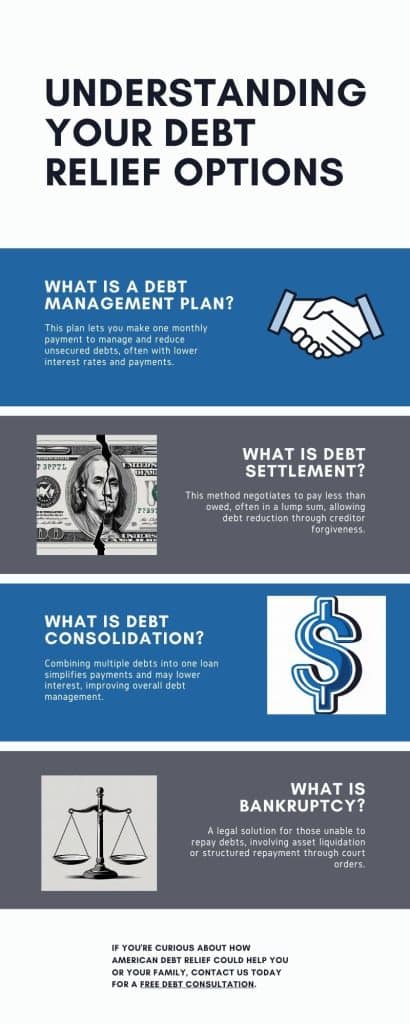
1. Debt Management Plan (DMP) – A Coach for Your Cash
• You work with a certified credit counselor (kind of like a financial coach).
• They help you make a monthly budget and review your debts.
• The counselor talks to your creditors and asks them to lower interest rates or remove late fees.
• Then you make one payment to the counseling agency each month, and they pay all your bills for you.
How it works:
Let’s say you owe money on five credit cards. Instead of paying each one separately, you pay one amount to your counselor. They handle the rest! Your debts are paid off slowly over 3 to 5 years.
Good for: People who still have steady income and want help staying organized.
Watch out: You may not be allowed to use or apply for credit cards while you’re in the plan.
2. Debt Settlement – Let’s Make a Deal
• A debt settlement company works with your creditors.
• They try to “settle” the debt for a smaller amount.
• You save up money in a special account until there’s enough to make a lump-sum offer.
How it works:
Example: You owe $12,000. The settlement company might get your creditor to accept $6,000. Once you pay it, the debt is gone!
The debt settlement process usually takes some time—think two years or more. Here’s what to expect: You’ll save up money each month in a special account, and once there’s enough, your settlement company will try to make a lump-sum offer to your creditors. The faster you can set money aside, the sooner your debts may be settled. On average, most people finish the process in about 25 to 48 months, depending on how much debt you have and how much you can pay each month.
Good for: People with a lot of debt who are already behind on payments.
Watch out: Your credit score may drop at first, and you may owe taxes on the forgiven amount. Debt settlement typically requires you to stop making payments on your debts while negotiations are underway. This pause in payments can cause a significant dip in your credit score and may take several months or even years to recover from, even after your debts are resolved.
3. Debt Consolidation – Bundle It Up!
• You get a personal loan or use a balance transfer credit card.
• You use that money to pay off your other debts.
• Now you only have one payment to keep track of each month!
How it works:
Imagine juggling four credit cards with high interest rates. Debt consolidation means you pay them off using a new, lower-interest loan. Then you make just one payment instead of four.
Good for: People with decent credit who want to simplify their payments.
Watch out: You need to stop using old credit cards or the debt can build back up.
4. Bankruptcy – Last Resort, But Sometimes Needed
There are two main types:
• Chapter 7 Bankruptcy: Most of your debts are wiped away, but you may lose some property.
• Chapter 13 Bankruptcy: You keep your property but follow a strict court-approved payment plan for 3 to 5 years.
How it works:
A court reviews your money situation. If you qualify, they either clear your debt or help you pay it off in a way you can afford.
Good for: People who have tried everything else and still can’t keep up.
Watch out: Bankruptcy hurts your credit and stays on your record for up to 10 years.
Which Type of American Debt Relief Should You Choose?
That depends on:
• How much you owe
• Your income and expenses
• Your credit score
• Whether you’re current or behind on payments
There’s no one-size-fits-all answer—but there is help. Talk to a certified credit counselor before choosing. They can help you pick the best path!
Is American Debt Relief Right for Me?
If you:
• Have more debt than you can handle
• Are falling behind on payments
• Feel stressed or confused about your money
…then American Debt Relief might be a smart move.
There isn’t one universal qualification standard because different debt relief options have different requirements.
For example:
Credit counseling:
You generally don’t need to be behind on your payments just to speak with a credit counselor. Counseling can be useful even if you’re current on all your bills but want help creating a plan.
Debt management:
You’ll generally need enough income to make the required monthly payment under the plan. The debts must also be eligible for the program.
Debt consolidation:
Qualification depends on the lender. Your credit history, income, debt-to-income ratio, and other factors may affect whether you qualify and what interest rate you’re offered.
Debt settlement:
Settlement programs are generally designed for consumers who are experiencing financial hardship and may not be able to repay their unsecured debts in full. Falling behind on payments can be part of some settlement strategies and can have serious consequences.
Bankruptcy:
Bankruptcy has its own legal eligibility requirements, which vary depending on the chapter being considered.
So, being current on your bills does not automatically mean you don’t qualify for debt relief.
If you’re struggling but haven’t missed payments, consider speaking with a credit counselor or comparing consolidation and debt management options before intentionally falling behind.
Lastly always check if the company is trustworthy! Look for reviews, check for a good rating with the BBB (Better Business Bureau), and make sure they explain everything clearly.
How Do American Debt Relief Companies Charge Fees?
Debt relief costs depend on the service you choose.
A credit counseling session may be free or low-cost, while a debt management plan may involve setup and monthly fees. A consolidation loan may involve interest and lender fees. Debt settlement may involve program or settlement fees that are governed by applicable laws and disclosed in the agreement. Bankruptcy may involve court filing fees and attorney fees.
That’s why it’s important not to judge a debt relief program solely by whether it has an upfront fee.
Instead, ask:
- What will I pay to enroll?
- Are there monthly fees?
- Are there interest charges?
- Are there origination or other lender fees?
- How are service fees calculated?
- When are fees charged?
- What happens if I cancel?
- What is the estimated total cost of completing the program?
A reputable provider should explain its fees clearly before you enroll and provide the applicable terms in writing.
Account Help at Your Fingertips
Need to check your progress or ask a question? Good news: Most American debt relief companies let you log in anytime with a handy online dashboard.
With these easy tools, you can:
- Track your payments and watch your savings grow
- See any offers or updates from your creditors
- Upload documents if you get new letters or bills
- Decide which accounts to include or remove from your plan
Plus, if you have questions or need help, customer support is usually just a phone call, chat, or email away—no need to wait until Monday morning. These features put you in the driver’s seat, so you always know what’s happening with your money.
Watch Out for Scams!
Some fake companies just want your money. Yikes!
Real debt relief companies:
• Don’t ask for big fees up front
• Tell you all the pros AND cons
• Let you cancel anytime
If someone promises to “erase your debt overnight,” that’s a red flag. Be careful!
How Are Customer Reviews Checked?
When evaluating any debt relief provider, don’t rely on a single badge, rating, or online review.
Look at the company’s:
- Length of time in business
- Licensing or registration where applicable
- Industry memberships and accreditations
- Better Business Bureau profile
- Customer reviews
- Fee structure
- Cancellation policies
- Complaints and regulatory history
- Specific services it provides
Most importantly, make sure the company clearly explains what it can and cannot do for you.
Common Complaints About American Debt Relief
Like virtually any financial service provider, a debt relief company can receive both positive and negative customer feedback.
Some complaints consumers may report about debt relief services include:
- Unwanted calls or aggressive marketing
Some consumers may become frustrated by frequent calls or marketing communications. - Unexpected fees or costs
Customers may feel surprised if they don’t fully understand program fees, interest charges, loan costs, or other expenses before enrolling. - Results that don’t match expectations
Debt relief outcomes can vary significantly. A consumer may expect a particular savings amount, repayment timeline, or credit improvement and ultimately experience something different. - Communication problems
Consumers may report difficulty getting clear answers about their accounts, payments, program status, or available options. - Longer-than-expected timelines
Some debt relief programs can take several years to complete, and consumers may become frustrated if their financial situation doesn’t improve as quickly as they expected. - Difficulty changing or leaving a program
Consumers may have questions about cancellation, refunds, account transfers, or what happens to their debts after leaving a program.
These issues don’t necessarily mean a company is unsuitable for everyone. They do highlight why it’s important to read the agreement carefully, understand all costs, and ask questions before enrolling.
Real Talk: Does American Debt Relief Work?
For many people, yes! It can help lower your stress, shrink your debt, and get you back on track. It’s not always easy or fast, but it is possible.
Just like brushing your teeth or doing homework, a little effort every day adds up!
What Are Customers Saying About American Debt Relief?
Customer experiences with debt relief companies can vary considerably.
Some customers may appreciate:
- Helpful and knowledgeable customer service
- Assistance understanding their debt
- A structured plan for addressing multiple accounts
- Help organizing payments
- A greater sense of control over their finances
Others may experience frustrations involving:
- Communication or response times
- Fees or other program costs
- Expectations about how quickly their debt will be resolved
- Changes to their credit profile
- Difficulty understanding program terms
- Results that differ from what they expected
It’s important to remember that debt relief is highly dependent on an individual’s circumstances. Two customers can use the same company and have very different experiences based on their debt balances, income, credit profile, creditors, and the program they select.
The best approach is to read reviews from several independent sources, look for consistent patterns, and compare the actual terms of the program before making a decision.
Final Thoughts
Debt can feel like a mountain, but American Debt Relief gives you hiking boots, a backpack, and a map.
With the right help and a solid plan, you can climb out and enjoy the view from the top.
Ready to Learn More?
If you’re curious about how American Debt Relief could help you or your family, contact us today for a free debt consultation. You’ve got this!