

Hey there! Let’s talk about something that could change your life for the better: getting debt help. You might have maxed out your credit cards and have significant amounts of debt, maybe it sounds a bit scary and is dragging you down. But don’t worry! We’re going to explore what types of debt help are available, and how they could make your life a whole lot better. So, let’s dive in and learn about the different options for getting debt help, how they work, and the pros and cons of each. Plus, we’ll discover the amazing benefits of becoming debt-free!
What is Debt Help?
Getting debt help is like having a superhero by your side when you’re dealing with money problems. It’s all about finding ways to manage and reduce the money you owe to others. Whether it’s credit card bills, student loans, or other types of debt, the following debt help options can guide you to a brighter financial future.
What Should I Do If I’m Behind on My Bills?
If you’ve fallen behind on your bills, don’t panic—there are steps you can take right now to start turning things around. First, grab all your recent bills and pay stubs so you can get a clear view of your finances. Look for places where you might be able to trim spending, even temporarily—maybe it’s skipping that extra streaming subscription or cutting back on those weekly coffee runs.
Next, reach out to your creditors as soon as possible. It may feel intimidating, but many lenders and service providers (think credit card companies like Chase or utilities) actually appreciate when you contact them directly. Be honest about your situation and ask if they can offer a modified payment plan, pause on interest, or even some bill forgiveness. Remember, the earlier you communicate, the more options you’re likely to have.
In some cases, creditors may be open to negotiating and could accept reduced payments or an extended payment timeline. The key is to be proactive—you’d be surprised how helpful companies can be when you reach out before things escalate to debt collection.
What Should I Do If I’m Way Behind on Credit Card Debt?
First off, take a deep breath—you’re not alone, and there are steps you can take to get things back on track. If your credit card bills are piling up and you’ve missed several payments, here’s what you can do:
- Call Your Credit Card Company
Grab your latest statement and call the customer service number. Credit card companies would much rather work with you than not get paid at all. Be honest about your situation, ask if they can lower your interest rate, and see if they’ll set up a payment plan you can actually afford. You might be surprised by how willing they are to help. - Document Everything
Write down who you spoke to, when you called, and what was discussed. If you come to an agreement, ask for everything in writing—don’t rely on just a phone call. Save those documents in a safe place until every payment is made. - Understand the Consequences
If you haven’t made your minimum payments in a while, your credit score may take a hit, and after several missed payments (usually four to six months), the credit card company might “charge off” your account. This doesn’t erase your debt—often, it just means your balance is sold to a debt collector who will then come calling. The good news? Even at this stage, creditors and collectors might be open to negotiating a payment plan or settling the debt for less than you owe.
Don’t feel pressured to pay someone to negotiate for you—you can pick up the phone and start the conversation yourself, free of charge. The most important part is to act sooner rather than later; open communication goes a long way toward finding a solution.
What Happens If You Miss Multiple Credit Card Payments?
So, what actually happens if you fall behind on those monthly payments—not just once, but for several months in a row? First off, your credit score can take a real nosedive. Missing even one payment can make banks and lenders a bit uneasy, but missing several can have a much bigger impact.
If you continue to miss payments, your credit card company might eventually “charge off” your account (which is just fancy bank talk for marking your debt as unlikely to be paid). But—and here’s the catch—that doesn’t mean your debt magically disappears. You’ll still owe the money, and the lender could hand your account over to a debt collection agency. These collectors can be quite persistent, reaching out to you in various ways to get their money back.
The silver lining? Some credit card companies are willing to work with you, even after things have gone south. If you’re struggling, it’s often worth reaching out and seeing what sort of payment plan or reasonable arrangement you can negotiate. Being proactive could help minimize the damage and put you on a better path.
Understanding the Statute of Limitations on Debt
You might be wondering: what happens if your debt has been hanging around for years? Here’s where the “statute of limitations” steps in—it’s a bit like an expiration date for how long collectors can take legal action against you for an old debt. This time period usually kicks off when you first miss a payment, and it varies from state to state and by the type of debt (like credit cards, auto loans, or medical bills).
Once the statute of limitations runs out, your debt is called “time-barred.” That means debt collectors can’t sue you or even threaten to take you to court over it. But—and this is important—making a payment or even acknowledging in writing that you owe the debt could restart that countdown clock. So, before you agree to anything or send in payment for an older debt, it’s a smart move to check your state’s rules or talk with a trusted financial advisor.
Let’s move on to the practical options you have when it comes to tackling your debt and making a fresh start.
Repayment and Forgiveness Options for Federal Student Loans
Let’s be honest—student loans can feel like a huge weight on your shoulders. But if you have federal student loans, there’s good news: you’ve got options! The U.S. Department of Education offers several repayment plans and even some forgiveness programs designed to help make your student debt more manageable.
Here’s a quick rundown of what could help:
- Income-Driven Repayment Plans: Your monthly payment is based on how much you earn, not how much you owe. If money is tight, these plans can lower your payment to a more manageable amount.
- Public Service Loan Forgiveness (PSLF): If you work for a qualifying employer (like a government agency or nonprofit) and make consistent payments for a certain number of years, you could have your remaining balance wiped out—poof, gone!
- Teacher Loan Forgiveness: Teachers in low-income schools may qualify for forgiveness after five consecutive years of service.
- Deferment or Forbearance: If you’re experiencing a financial hardship (like unemployment or unexpected expenses), you may be able to temporarily pause your payments without penalties.
Applying for these programs won’t cost you anything, and you can find all the info you need—and get started—at StudentAid.gov. If you’re unsure which way to go, reach out to your student loan servicer for personalized advice. Remember, you don’t have to figure this out alone—help is just a click or call away!
What Happens If My Debt Is Very Old?
Great question! You might be wondering, “If my debt has been hanging around for years, do I still need to worry?” Here’s the scoop: while debt doesn’t magically disappear, the rules for collecting it can change over time thanks to something called the “statute of limitations.” This is basically a time limit on how long creditors or collection agencies can take legal action against you for an unpaid debt. Once that period has passed, your debt is considered “time-barred”—and collectors generally lose the right to sue you for payment.
But here’s a twist: the statute of limitations is different depending on what state you live in (or sometimes what’s written into your original agreement). For example, in Texas it might be four years, while in Rhode Island it can stretch up to ten! So, it’s important to check your state laws or review your credit agreements if you’re unsure.
One thing to watch out for: if you make a payment—or even simply acknowledge in writing that you owe the debt—you could accidentally restart the clock. That means your debt is no longer considered old for legal purposes, and the collection agency might have another shot at taking you to court.
So, if you get a call about a super-old debt, take a breath and don’t agree to anything right away. Get the details, check the age of the debt, and know your rights. If you’re ever in doubt, reaching out to a reputable nonprofit credit counseling agency can help you sort it all out.
What Are My Rights When Dealing with Debt Collectors?
When you get a call from a debt collector, it can feel intimidating—but you’ve got more power than you might think! There are laws designed to protect you from harassment, trickery, and shady behavior. Here’s what you need to know to stay confident and in control:
- Collectors Can’t Harass You: They’re not allowed to threaten, yell, or use any foul language. No one needs that kind of negativity, especially when you’re already stressed.
- Verification Is Your Right: If a collector contacts you, ask them to send the details of your debt in writing. You deserve proof before paying a dime or sharing any personal info. Not everyone who calls claiming you owe money is the real deal.
- Set Boundaries: Collectors can’t call you at all hours of the day or hassle your friends and family. You can even request—in writing—that they stop contacting you altogether.
- No Sharing Sensitive Info: Don’t give out your personal or financial details unless you’re sure you’re dealing with a legitimate collector. Scammers love to prey on people who are feeling overwhelmed.
- You Can Dispute the Debt: If you think there’s a mistake, speak up! You have the right to dispute the debt—and the collector must look into it.
Remember, you don’t have to face debt collectors alone. Knowing your rights is your financial shield! If you’re ever unsure, organizations like the Consumer Financial Protection Bureau (CFPB) offer helpful guides to understand and protect your rights.
How to Tell if a Debt Collector Is the Real Deal (or Just a Sneaky Scammer)
Picture this: your phone rings, and someone claiming to be a debt collector is on the line. Instant nerves, right? But before you panic—or hand over any information—let’s make sure you’re dealing with a legitimate collector and not a scam artist fishing for your hard-earned cash.
Here’s how to spot the difference:
- Ask for the Details: A real debt collector should be able to tell you who they are, the company they work for, why they’re contacting you, and the exact amount you supposedly owe. If they dodge your questions, that’s a red flag.
- Don’t Share Personal Info: Never give out your bank account, Social Security number, or other private details until you’re confident the caller is for real.
- Do Some Detective Work: Search for the company online—see if you can find their phone number and reviews on sites like the Better Business Bureau (BBB). Call them back using a verified number, not the one that popped up on your phone.
- Watch for Pressure Tactics: If someone is threatening you, demanding immediate payment, or making you feel rushed, pause! Scammers love to stress you out so you won’t think things through.
- Request Written Verification: By law, legitimate collectors should provide written proof of your debt. If they refuse, that’s about as shady as it gets.
Staying calm and keeping these tips in mind can help you avoid scams and put you back in the driver’s seat of your finances.
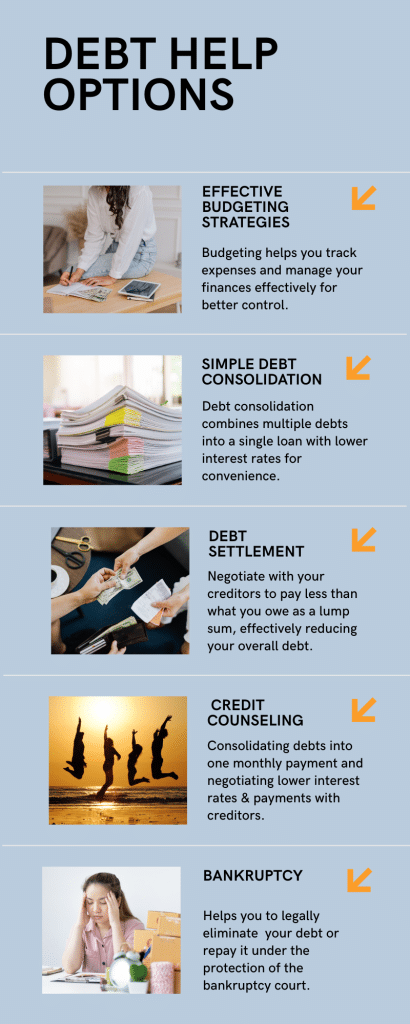
Options for Debt Help
There are several options for debt help, and each one works a bit differently. Let’s explore them one by one:
1. Budgeting
Pros:
- Control Over Finances: Budgeting gives you a clear picture of your financial situation, helping you control your spending and saving habits.
- Customizable: You can tailor your budget to fit your lifestyle and financial goals.
- Empowering: Knowing where your money goes can empower you to make better financial decisions.
Cons:
- Time-Consuming: Setting up and maintaining a budget can take time and effort.
- Requires Consistency: You need to consistently track your expenses and adjust your budget as needed.
2. Debt Consolidation A debt consolidation loan combines all your existing debts into a single loan with one monthly payment. Common ways to do this include taking out a second mortgage, using a home equity line of credit, or opting for a personal debt consolidation loan from a bank or finance company. The main goal is to streamline your payments and potentially save money by locking in a lower interest rate.
Pros:
- Single Payment: Simplifies your finances by combining multiple debts into one payment.
- Potential Savings: Lower interest rates can save you money over time.
- Improved Credit Utilization: Could improve your credit score by reducing the amount of credit you’re using relative to your limits.
Cons:
- Fees and Costs: Some consolidation loans come with fees that can add to your debt.
- Risk of More Debt: Without discipline, you might accumulate more debt after consolidating.
3. Debt Settlement
Pros:
- Debt Reduction: You might pay less than you originally owed.
- Avoids Bankruptcy: Provides an alternative to filing for bankruptcy.
Cons:
- Credit Impact: Can negatively affect your credit score and remain on your credit report for years.
- Tax Implications: The forgiven debt might be considered taxable income.
How Are Debt Settlement Fees Structured?
If you’re considering working with a debt settlement company, it’s important to know how their fees work—so you’re not caught off guard. Usually, here’s what you can expect:
- Performance-Based Fees: Legitimate debt settlement companies can’t charge you any fees until they actually settle at least one of your debts. When a settlement is made, they’ll typically charge you either a percentage of the amount settled, or a portion of the money saved from the reduction.
- Separate Account: You’ll often be asked to deposit funds into a dedicated account, managed by an independent third party. This account is yours—the money (including any interest it earns) remains under your control until used for settlements.
- Fee Transparency: Good companies will make it clear up front:
- The funds in your account are yours to access at any time, penalty-free.
- The account manager isn’t connected to the debt settlement company—they don’t earn referral fees.
- They’ll let you know what you’ll be charged, how payment works, and when.
Basically, you’re only on the hook for fees as each debt is negotiated and settled—not before. It’s designed to protect you from paying hefty charges if no progress is made.
When Can a Debt Settlement Company Charge Fees?
If you decide to work with a debt settlement company, it’s important to know when they are actually allowed to collect fees from you. Here’s the deal: a debt settlement company cannot charge you any fees upfront. They only get paid once they’ve successfully negotiated and settled at least one of your debts—which means real progress has been made in reducing what you owe.
Fee structures typically work like this:
- Pay for Results: You might pay a portion of the total debt that’s been resolved, or a percentage of the amount the settlement actually saved you.
- No Early Fees: They can only collect their cut after a successful settlement agreement with a creditor—not before.
- Clear Communication: You’ll always know what’s happening with your money along the way. The funds you set aside for settlements are yours, and you’re entitled to any interest earned. Plus, you can withdraw your money from the account at any time with no penalty.
This structure gives you some peace of mind: you only pay when the company delivers results, so there’s extra motivation for them to actually help you get closer to a debt-free future.
What to Get in Writing When Settling Debt Yourself
If you decide to tackle debt settlement on your own rather than working with a company, it’s important to protect yourself during the process. Once you and your creditor agree on a payoff amount, always ask for the terms of your agreement in writing before you send any payments.
Here’s what you’ll want to make sure is included in the letter or agreement:
- The exact amount you’ve agreed to pay as the settlement.
- Confirmation that your payment will settle the debt in full and that you won’t owe any more on that account.
- Details about how the account will be reported to the credit bureaus—ideally, you want it listed as “paid in full” or “settled.”
- Any deadlines for payments and instructions for how and where to send the money.
Having these points confirmed in writing helps make sure everyone is on the same page and gives you peace of mind in case any issues come up down the road.
Your Rights with a Debt Settlement Account
When you work with a debt settlement company, you may be asked to deposit money into a special account to save up for settlements. But don’t worry—this account comes with a few important protections to keep things in your favor:
- It’s Your Money: Every cent in that account, including any interest earned, belongs to you—not the debt settlement company.
- You Call the Shots: You can withdraw the money from this account at any time, without facing any penalties.
- Independent Oversight: The person or company managing your account isn’t tied to the debt settlement company, and they won’t get a kickback for handling your funds.
- Reasonable Fees Only: The account manager may charge a fair fee for maintaining your account, but it should never be excessive or hidden.
- Clear Communication: The debt settlement company must be upfront about these rights—you should always know what’s happening with your money.
Knowing your rights helps ensure you’re in control every step of the way, keeping your hard-earned cash working toward your debt-free goals.
How Is Debt Settlement Different from Debt Management Plans?
It’s easy to mix up debt settlement with debt management plans, but they work quite differently behind the scenes.
Debt settlement usually involves working with a for-profit company to try to reduce the total amount you owe. Basically, these companies reach out to your creditors and try to negotiate an agreement where you pay a lump sum that’s less than your full balance. The catch? You’ll need to save up that lump sum by setting aside money every month into a special account until you’ve got enough to make the offer. Often, debt settlement companies may even suggest you pause your regular payments to creditors while negotiations are underway.
In contrast, a debt management plan (often run by non-profit credit counseling agencies) doesn’t aim to reduce your principal. Instead, it helps you pay off your full balance—typically at a reduced interest rate or with waived fees—through affordable monthly payments spread out over several years. With a debt management plan, you keep making regular payments, and your creditors may even consider you “current” on your debts as long as you stick to the plan.
So, in a nutshell:
- Debt Settlement tries to get you out for less than you owe but can take a toll on your credit and sometimes involves stopping payments for a while.
- Debt Management Plans help you pay everything off (with some relief on interest and fees) in a more structured, less risky way.
And now, let’s see how credit counseling fits into the big picture of debt help…
What Are the Risks of Not Completing a Debt Settlement Program?
While debt settlement can seem like a tempting way out, it doesn’t work for everyone—and not finishing the program can have some hefty downsides. Here’s what you need to watch out for if you don’t make it to the finish line:
- Losing Fees Paid: If you drop out before your debts are fully settled, you may have already paid some fees that you can’t get back. That’s money out the door without the full benefit of debt relief.
- Unresolved Debts: Any debts left unsettled still need to be paid. You could end up facing collection calls, late fees, and even lawsuits on balances that didn’t make it into a final agreement.
- Credit Score Damage: Missing payments during the settlement process can leave a trail of late payments on your credit report, which can seriously tank your score and stick around for years.
- Financial Stress: Starting a settlement plan only to find it’s unaffordable can be stressful. If you’re unable to save the required monthly amount, it’s easy to fall behind and feel even more overwhelmed than before.
Before signing up for debt settlement, make sure your budget allows for those regular payments over the entire course of the program. It’s smart to double-check that you can stick with it—otherwise, you risk ending up in a tougher spot than where you started.
What If a Debt Settlement Company Isn’t Honest?
It’s super important to remember: any debt settlement company you work with should be completely up-front about how things work. Before you sign anything, they need to clearly explain the fees, details about how long the process will take, what you might risk by pausing payments on your debts, and exactly how much money you’ll need to save up before they start negotiating with creditors for you.
So, what happens if the company isn’t being straight with you—maybe they’re dodging questions about costs, timelines, or the risks involved? Or maybe they just skip over some of the fine print entirely? Don’t ignore those red flags! If a company avoids answering these questions or makes things sound “too good to be true,” it’s a sign to head for the exit.
In short: If you feel like you’re not getting the full picture or if the promises sound a bit magical, trust your gut and keep looking for a more transparent, trustworthy provider. Your financial future deserves honesty.
What Happens If Your Creditor “Charges Off” Your Debt?
Let’s take a quick peek behind the curtain: if you stop making at least the minimum payments on your debts for several months, your creditor might eventually “charge off” your account. Sounds ominous, right? Here’s what’s really going on.
When an account is “charged off,” your lender is basically waving the white flag and considering the debt a loss in their books. But—surprise!—that doesn’t mean your debt disappears. In fact, you still owe every penny. Your credit score? It’ll likely take a dip when this happens, making future borrowing trickier.
Often, the creditor will sell your debt to a collection agency, which may step up efforts to collect. You might get collection calls or letters—yep, it can feel a bit like the plot of a financial thriller.
But here’s the silver lining: even after a charge-off, some creditors or collection companies are still open to negotiation. That means you may have a chance to settle your account for less than the full amount or set up a payment plan. So, if you find yourself in this situation, don’t panic. It’s not the end of the road—just another chapter in your debt-free journey!
Spotting Debt Settlement Scams
It’s important to keep your guard up—debt settlement scams are out there, and they can make a tough situation even worse. How can you spot a scam before you get in too deep? Here are some clear red flags to watch out for:
- Upfront Fees: Legitimate companies never ask for payment before they’ve actually settled any of your debts or set up a plan with your creditors.
- Promises That Sound Too Good to Be True: Be wary if someone guarantees they’ll erase all your debt or offers “instant” loan forgiveness.
- No Review of Your Finances: If a company is ready to sign you up without even looking at your financial situation, that’s a major warning sign.
- Claims of Special Government Programs: Scammers might say you qualify for a “government debt relief plan” that will wipe out everything—real debt relief doesn’t work this way.
- Telling You to Cut Ties With Creditors: If someone instructs you to stop all communication with the companies you owe (without carefully explaining the risks), that’s a red flag.
- False Legal Promises: Watch out for claims that they can “stop any debt collection lawsuit” with no explanation or strategy.
If any of these pop up in your conversations, take a step back. Reputable debt settlement companies are upfront, transparent, and always review your unique situation before making any moves.
4. Credit Counseling
Pros:
- Professional Support: Access to financial experts who can guide you through debt management.
- Reduced Interest Rates: Credit counseling agencies often negotiate with creditors to lower interest rates on your debts. This can significantly reduce the amount of interest you pay over time, making it easier to manage your debt.
- Lower Monthly Payments: By negotiating lower interest rates and possibly waiving certain fees, credit counseling can help reduce your overall monthly payments. This makes it more manageable to keep up with payments and stay on track with your debt management plan.
Cons:
- Possible Restrictions: Some plans may restrict the use of credit cards or require you to close existing accounts, which could impact your credit utilization ratio.
- Commitment Required: You need to stick to the debt management plan for it to be effective.
How Debt Management Plans Work
When you sign up for credit counseling, a counselor will typically start by reviewing your entire financial situation. This review helps them understand your specific needs and tailor advice to your circumstances. If it makes sense, the counselor may recommend enrolling in a debt management plan (DMP). Debt management plans are designed for unsecured debts, such as credit cards, some student loans, and medical bills.
Here’s how a typical debt management plan works:
- The counselor develops a payment schedule with you and your creditors. Your creditors might agree to lower your interest rates or waive certain fees.
- You deposit a set amount of money each month with the credit counseling organization.
- The counselor uses these deposits to pay your unsecured debts, distributing payments to your creditors according to the plan.
It’s important to note that DMPs do not cover debts secured by collateral, like mortgages or car loans.
A reputable counselor will spend the time necessary to understand your situation before making any recommendations. If a counselor immediately pushes a debt management plan without a thorough review of your finances, consider seeking help elsewhere. Also, before you commit to a plan, double-check with your creditors to ensure they will honor the terms being offered.
How Do I Know If a Debt Management Plan Is Right for Me?
Choosing the right path out of debt can feel overwhelming, so how do you know if a debt management plan (DMP) is the right choice for you? Here’s how to figure it out:
- You’re Struggling to Keep Up With Payments: If making minimum payments feels impossible or you’re juggling multiple due dates, a DMP could help simplify your finances by rolling your debts into one manageable monthly payment.
- Interest Rates Are Weighing You Down: If high interest rates are making it hard to get ahead, a DMP might be a good fit, as reputable credit counseling agencies can often negotiate with creditors to lower those rates.
- You Want to Avoid Bankruptcy: If you’re looking for a way to get out of debt without filing for bankruptcy, a DMP provides a structured, less severe alternative.
- You’re Ready for Commitment: These plans usually require steady, on-time payments for several years—think marathon, not sprint. You may also need to hit pause on taking out new credit while your plan is active.
- You Want Professional Help: If guidance from financial experts sounds reassuring, a DMP comes with built-in coaching from certified credit counselors to keep you on track.
However, debt management plans aren’t a one-size-fits-all solution. If your debts are mostly secured (like a car loan or mortgage), or you can manage payments on your own with some budgeting tweaks, a DMP might not be necessary.
Before jumping in, sit down with a trusted, non-profit credit counselor to map out your options. They’ll review your finances and help you decide whether a DMP—or another route—will light your way toward financial freedom.
What to Consider Before Enrolling in a Debt Management Plan
Before jumping into a debt management plan, there are a few key things you’ll want to keep in mind:
- Comprehensive Review: Make sure the credit counselor takes a good, hard look at your entire financial picture—not just your debts. You want someone who’s willing to discuss your goals, budget, and specific needs, not a one-size-fits-all solution.
- Plan Details and Flexibility: Confirm that the proposed plan will actually cover your types of debt. Debt management plans generally work well for unsecured debts like credit cards and medical bills, but they won’t help with things like mortgages or auto loans.
- Creditor Participation: Not all creditors may agree to the terms your counselor suggests. Always double-check that your creditors are on board with the modified payments or interest rates.
- Commitment Level: These plans require you to make on-time monthly payments for several years—often four years or more. You may also need to agree not to open or use new credit lines during this time.
- Impact on Credit and Spending: Some plans might require you to close existing credit cards, which can affect your credit utilization and credit score in the short term.
- Reputable Guidance: Be wary of any counselor who pushes a debt management plan right away without a detailed financial assessment. A trustworthy advisor will help you decide if this is truly your best route, or if another solution suits your situation.
Taking the time to carefully weigh these factors can make all the difference in choosing the right path to financial stability.
Who Might Benefit from a Debt Management Plan?
Debt management plans can be a powerful tool for certain people facing debt challenges. If you have steady income but are struggling to juggle multiple monthly payments—especially high-interest credit card bills—a debt management plan might be right up your alley. You’re an ideal candidate if:
- You feel overwhelmed by several unsecured debts (like credit cards or medical bills).
- You want to simplify your finances with a single monthly payment.
- You’re ready to stick to a structured plan and make consistent payments for several years.
- You need help negotiating lower interest rates or waived fees with creditors.
However, it’s not a one-size-fits-all solution. A debt management plan works best for those who are committed to making long-term changes and don’t mind temporarily pausing access to new credit. Before you jump in, a reputable credit counselor will review your financial situation and help you decide if this path truly fits your goals.
Are Debt Management Plans Right for Every Debt?
It’s important to know that debt management plans aren’t a universal fix for every kind of debt. These plans are designed specifically for unsecured debts—think credit cards, medical bills, and sometimes student loans. If you’ve got debts that are secured by collateral, like your mortgage or auto loan, a debt management plan won’t cover them.
Here’s how the process usually shakes out:
- You’ll work with a credit counselor to analyze your finances and create a plan.
- If it’s a good fit, your counselor will help you set up manageable payments to cover your unsecured debts.
- Your counselor might also negotiate with your creditors to lower your interest rates or waive certain fees.
But here’s the catch: not every counselor—or every plan—fits every situation. If someone pushes a debt management plan without truly understanding your unique finances, that’s a red flag. The best counselors tailor their advice to your needs, making sure a debt management plan is genuinely the right step—not just a one-size-fits-all solution.
So, before you sign up, make sure you understand which of your debts are included and confirm that the plan matches your financial goals.
Watch Out for Credit Counseling Scams
Not all credit counseling services have your best interests at heart. Some less-than-reputable organizations can actually make your situation worse. Keep an eye out for these red flags:
- Big Promises Upfront: If a company guarantees to eliminate all your debt or boost your credit score overnight, be cautious. Legitimate credit counselors will never promise instant fixes.
- Hefty Fees Before Help: Be wary of any service that asks for large fees before providing any actual assistance. Reliable agencies clearly explain their costs and won’t require big upfront payments.
- Pressure Tactics: If you feel pressured to sign up on the spot or discouraged from asking questions, that’s a sign to walk away.
- Lack of Transparency: Reputable organizations, like the National Foundation for Credit Counseling (NFCC) or American Consumer Credit Counseling, will provide clear written information about their services, fees, and your rights as a consumer.
Stay vigilant and always check for reviews and accreditation before committing to a credit counseling service.
What to Ask a Credit Counselor Before You Begin
Before you jump in, it’s smart to know exactly what you’re signing up for. Asking the right questions up front can help you feel confident and avoid any financial surprises down the road. Here are some questions to keep in your back pocket during that first conversation with a credit counselor:
- What specific services do you offer, and how can they help me tackle my debt?
- Can you break down all the fees, including one-time setup costs or monthly charges?
- Is there free information or educational material available to help me learn about managing debt on my own?
- Are you certified or accredited by reputable organizations like the National Foundation for Credit Counseling (NFCC) or the Financial Counseling Association of America (FCAA)?
- How do you handle personal information, and what steps are taken to keep my data safe?
- What are the qualifications and experience of your counselors?
- Will enrollment in your program impact my credit score, and if so, how?
- Are there any potential drawbacks or restrictions I should know about before starting a debt management plan?
Getting clear answers to these questions puts you one step closer to choosing a trustworthy partner in your journey to become debt-free.
How Do I Find a Trustworthy Credit Counselor?
Finding the right credit counselor can make a world of difference on your debt-free journey—but how can you tell who’s legit and who’s just after your wallet? Here’s how to spot a trustworthy credit counseling organization:
1. Do Your Homework
- Compare Options: Don’t just go with the first name you find online. Look up a few organizations and check their websites for details about their services, fees, and counselors’ qualifications.
- Check for Accreditation: Reliable credit counselors are often certified by reputable, independent organizations. Look for accreditation or certification details on their site.
- State Licenses: Some states require credit counseling agencies to be licensed. Contact your state’s attorney general or consumer protection office to confirm if licensing is required and whether your picks are properly registered.
2. Ask Smart Questions
When you talk to a credit counselor (don’t be shy—it’s your financial future!), consider asking:
- What can you do to help me specifically?
- How are your counselors trained or certified?
- Are there upfront or ongoing fees? Will I get a written quote?
- Can I access free educational tools and resources?
- Will you help me even if I can’t pay all the fees right now?
3. Red Flags to Watch Out For
Steer clear if you see any of these warning signs:
- Demands payment before providing services
- Vague answers about services or fees
- Makes big promises to “erase” your debt overnight
- Reluctance to provide details in writing
4. Before You Commit
- Read Everything: Insist on getting all promises and fee schedules in writing. Make sure you understand the terms before signing anything.
- Range of Services: A solid credit counseling agency will offer a variety of options, from budget help to debt management classes, so you can find a plan that fits you.
Taking the time to find a reputable credit counselor sets you up for financial success—and keeps your money safe from scammers.
How to Check If a Credit Counseling Organization Is Legitimate
Before signing up with any credit counseling service, it’s important to make sure the organization is reputable and trustworthy. Not every organization that claims to help is looking out for your best interests—some charge excessive fees or don’t provide the support you need. Here’s how you can protect yourself and make a smart choice:
- Do Your Homework: Look up the organization with your state attorney general’s office or local consumer protection agency to see if any complaints have been filed or if your state requires them to be licensed. Make sure they have the proper credentials if licensing is necessary.
- Request Information Upfront: A trustworthy credit counseling agency should offer you free, clear information about their services before asking you for any personal details or commitments.
- Compare Services and Credentials: Go for organizations whose counselors are certified by reputable, third-party institutions. Look for those offering a full suite of services—think budgeting help, debt management classes, and free educational materials.
- Ask for Fees in Writing: Legitimate organizations will lay out all fees and costs in writing before you agree to anything. Be cautious of anyone asking for payment upfront for services not yet provided.
- No Hard Sells or Barriers: The right organization will work with you—even if you can’t afford their fees or aren’t ready to commit right away. They should not pressure you or make promises that seem too good to be true.
- Read the Fine Print: Always get the details and any promises in writing. Carefully review any contracts before you sign, so you’re never caught off guard by surprise charges or commitments.
Taking a few extra steps now can save you time, money, and stress down the road—and help ensure your path to financial freedom is built on trustworthy advice.
5. Bankruptcy
Pros:
- Debt Discharge: Can eliminate most unsecured debts, giving you a fresh start.
- Legal Protection: Stops collection activities and legal actions from creditors.
Cons:
- Severe Credit Impact: Stays on your credit report for up to 10 years, affecting your ability to get credit.
- Loss of Assets: Depending on the type of bankruptcy, you might have to sell assets to pay creditors.
While bankruptcy is generally considered a last resort due to its long-term consequences, it may still be the right move if you’re facing insurmountable financial trouble. Keep in mind that bankruptcy can make it much harder to qualify for future credit, buy a home, secure life insurance, or even land certain jobs. However, for some, it provides the opportunity to reset financially and move forward without the weight of unmanageable debt.
Understanding Chapter 7 vs. Chapter 13 Bankruptcy
When it comes to bankruptcy, there are two main types individuals typically consider: Chapter 7 and Chapter 13. While both are designed to help people manage overwhelming debt, they work in very different ways.
- Chapter 13 Bankruptcy:
- Designed for those with a regular income, this option allows you to keep important assets—like your home or car—even if you’re behind on payments.
- Instead of wiping out debt right away, you’ll work with the court to create a repayment plan that lasts three to five years. During this time, you’ll pay back a portion of your debts in manageable installments.
- Once you successfully complete your repayment plan, any remaining eligible debt is discharged, meaning you’re no longer responsible for it.
- Chapter 7 Bankruptcy:
- Often called “straight bankruptcy,” Chapter 7 is focused on quickly erasing most unsecured debts.
- In exchange, you may need to give up some of your assets. Certain items—like tools needed for work, a basic vehicle, or household goods—are typically protected (“exempt”) and can’t be taken.
- Non-exempt property, however, may be sold by a court-appointed trustee to help pay off your creditors. Once the process is complete, most of your remaining unsecured debts are eliminated.
Which option makes sense depends on your unique financial situation, your goals, and whether you’re hoping to keep certain property or need a fresh start as quickly as possible.
What Debts Cannot Be Erased by Personal Bankruptcy?
It’s important to know that personal bankruptcy doesn’t wipe the financial slate completely clean. Certain types of debts are generally not eligible for discharge. These include:
- Child Support and Alimony: Payments for family support obligations must still be made, even after bankruptcy.
- Certain Tax Debts: Most federal, state, and local taxes will remain your responsibility.
- Student Loans: While some exceptions exist if you can prove “undue hardship,” most student loan balances survive bankruptcy.
- Fines and Penalties: Amounts owed for criminal fines, traffic tickets, or court-ordered penalties typically won’t be erased.
- Secured Debts: If you have a loan tied to property—like a mortgage or car loan—and you fall behind, bankruptcy often won’t let you keep the property unless you’re able to catch up on payments as part of a payment plan.
So while bankruptcy offers powerful relief, it doesn’t eliminate every debt category. Being aware of these exceptions will help you plan your next financial steps strategically.
Required Debtor Education in Bankruptcy
After filing for bankruptcy, there’s one more key step you’ll need to complete before moving forward: required debtor education. This course is designed to help you build better financial habits moving forward. You’ll learn practical skills like budgeting, money management, and how to responsibly use credit so you’re better prepared for a fresh start.
To meet this requirement, you must take a debtor education course from a government-approved provider (there are several to choose from—just make sure they’re on the official list). After completing the course, you’ll receive a certificate of completion. You’ll need to file this certificate with the bankruptcy court to successfully wrap up your case. Skipping this step can delay or even jeopardize the resolution of your bankruptcy, so be sure to check this box before calling it done!
Next Steps After Filing for Bankruptcy
After you’ve filed for bankruptcy, there’s still a bit more homework to do before you can officially close this chapter. One of the most important steps is completing a debtor education course. This isn’t just busywork—the course is designed to help you build stronger money management skills, covering topics like budgeting, saving, and responsible credit use.
Here’s what you’ll need to do:
- Complete a Debtor Education Course: Make sure you choose a program that’s approved by the bankruptcy court. The course can usually be taken online, over the phone, or in person, depending on what’s most convenient.
- Get Your Certificate: Once you finish the course, you’ll receive a certificate of completion.
- File Your Certificate with the Court: Don’t forget this step! You’ll need to provide the court with that certificate as proof that you’ve met this requirement.
Taking this step not only checks an important box in the bankruptcy process but also gives you valuable tools for managing your finances moving forward.
Should You Pay for Help with Student Loan Debt?
When it comes to tackling student loan debt, you might wonder if it’s worth paying for outside help. The good news is, in most cases, you don’t have to spend a dime to get support or find solutions.
Here’s what you should know:
- DIY Solutions Are Available: Most student loan relief options—like exploring repayment plans, deferment, forbearance, or even forgiveness programs—can be accessed directly through your loan servicer or trusted government resources. It’s free to inquire, apply, or make changes to your repayment plan.
- Contact Your Loan Servicer First: Your loan servicer is your best starting point for both federal and private student loans. They can walk you through available options tailored to your needs, whether you’re struggling to make payments or seeking alternative repayment arrangements.
- Be Cautious of Fee-Based Services: Plenty of companies claim they can slash your payments or fast-track loan forgiveness, but many will charge hefty fees for things you can do yourself. In some cases, these services could even complicate your situation or lead you into further financial trouble.
- Where to Find Reliable Information: Organizations like StudentAid.gov for federal loans, or simply reviewing your latest billing statement for private loans, put you in the driver’s seat without added cost.
In short, you don’t need to pay for support managing your student loan debt—there are reliable, no-cost resources and programs that can empower you to take control without unnecessary expenses.
What Should I Do if I’m Having Trouble Paying My Mortgage?
If you find yourself struggling to make your mortgage payments, don’t panic—but don’t wait, either. The sooner you act, the more options you’ll have to protect your home and your credit.
Here’s what you can do:
- Reach Out to Your Lender Early: Contact your mortgage provider as soon as possible. Many lenders are willing to work with you if you’re proactive and honest about your situation. They may offer options such as:
- Temporarily lowering or pausing payments
- Extending your loan term to reduce monthly payments
- Understand the New Terms: Before agreeing to any changes, ask your lender about possible fees, changes to your interest rate, or other consequences of modifying your mortgage.
- Seek Professional Advice: If you’re unable to make arrangements directly with your lender, consider reaching out to a non-profit housing counseling service. For trustworthy, free guidance, look for a HUD-approved agency—you can find local options through the Consumer Financial Protection Bureau or your state’s housing authority.
- Beware of Scams: Unfortunately, some companies promise quick fixes but don’t deliver. Be cautious—never pay upfront for mortgage relief services, and be skeptical of guarantees that sound too good to be true. Stick with non-profit organizations and reputable resources to avoid falling victim to scammers.
Taking swift action and getting the right support can make a big difference—and may help you avoid foreclosure.
Should I Sell My Car Myself If I Can’t Keep Up With Loan Payments?
If you’re struggling to make your car loan payments, you might be wondering if it’s smarter to sell your car yourself rather than let the lender repossess it. In many cases, selling your car privately can be a great option—and here’s why:
- Avoid Repossession Costs: If your lender repossesses your car, you’ll likely have to cover costly fees like towing, storage, and administration. Selling the car yourself means you won’t have to deal with these extra charges.
- Protect Your Credit: Voluntarily selling your vehicle and paying off your loan in full is much less damaging to your credit score than having a repossession show up on your report.
- Take Control of the Sale: Selling your car on your own schedule gives you the chance to shop around for the best price, possibly getting more money than if the car were sold at auction after repossession.
Just keep in mind:
- Check Your Loan Balance: Make sure you know exactly how much you owe. Your car needs to sell for at least that amount (or you’ll need to cover any shortfall out-of-pocket) to pay off the lender.
- Coordinate With Your Lender: Let your lender know what’s happening, so the process goes smoothly and the title can be released to the new buyer.
If you know you can’t catch up on payments, selling the car yourself is usually the better choice, helping you sidestep fees and a black mark on your credit report. It’s a proactive step that can prevent further financial headaches.
By understanding the pros and cons of each debt help option, you’re better equipped to take control of your financial future. Remember, the journey to financial freedom is unique for everyone, so choose the path that best suits your needs and goals.
Benefits of Becoming Debt-Free
Now that we’ve explored the options for debt help, let’s talk about the amazing benefits of becoming debt-free:
- Peace of Mind:
- Reduced Stress: No more worrying about making ends meet or receiving collection calls.
- Mental Clarity: With financial burdens lifted, you ca…
What Happens If My Car Is Repossessed Due to Missed Payments?
Falling behind on your car payments can lead to repossession, often without advance warning from your lender. Once your vehicle is taken back, things can move quickly—your car may be towed away and stored until the lender decides what to do next. If you want the car back, you’ll usually need to pay the full remaining balance owed on your loan, plus additional costs like towing and storage fees. If coming up with that amount isn’t realistic, the lender may opt to sell your car to recoup as much of the debt as possible.
Repossession goes beyond just losing your car. There are lasting financial consequences, including a negative mark on your credit report. This can make borrowing money in the future more difficult and often results in higher interest rates. Additionally, if the sale of your car doesn’t fully cover your outstanding loan balance and applicable fees, you may still owe your lender the leftover amount—often called a “deficiency balance.”
Avoiding Repossession
If you realize that making your upcoming car payments will be a struggle, it’s usually a good idea to be proactive:
- Contact Your Lender: Some lenders are willing to work with you if you explain your situation early. They may offer a modified payment schedule or temporary relief options.
- Consider Selling the Car: Selling your vehicle yourself—before the lender initiates repossession—can help you pay off your loan and potentially avoid extra fees and additional damage to your credit.
By being aware of how repossession works and acting quickly when trouble arises, you can minimize the damage and steer your finances back on course.
By understanding the pros and cons of each debt help option, you’re better equipped to take control of your financial future. Remember, the journey to financial freedom is unique for everyone, so choose the path that best suits your needs and goals.
Benefits of Becoming Debt-Free
Now that we’ve explored the options for debt help, let’s talk about the amazing benefits of becoming debt-free:
- Peace of Mind:
- Reduced Stress: No more worrying about making ends meet or receiving collection calls.
- Mental Clarity: With financial burdens lifted, you can focus on other important aspects of life.
- Financial Freedom:
- More Choices: You can make decisions based on what you want, not just what you can afford.
- Opportunity to Pursue Dreams: Whether it’s starting a business or traveling, being debt-free opens up possibilities.
- Improved Credit Score:
- Better Loan Terms: A higher credit score can qualify you for better interest rates on loans and credit cards.
- Increased Trustworthiness: Lenders and landlords view you as a lower risk, making it easier to secure housing and credit. While paying off debt is a major step toward boosting your score, building a strong credit history takes time and consistent effort. After debt payoff, focus on these habits:
- Pay bills on time: Your payment history is a big factor in your credit score. Set up reminders or automatic payments to avoid late fees.
- Avoid new debt: Taking on new loans or maxing out cards can drag your score down.
- Check your credit reports: Errors happen. Regularly review your reports and promptly dispute any inaccuracies you find.
- Practice patience: Most negative information, such as late payments or defaults, will naturally drop off your credit report after seven years, while bankruptcies can linger for up to ten.
- Skip any shortcuts or “quick fixes” that promise to erase accurate, negative information from your credit report—those claims are usually a scam. Stick with steady, responsible habits, and your score will improve over time.
- Better Relationships:
- Less Financial Conflict: Money is a common source of stress in relationships; being debt-free can reduce arguments and tension.
- Shared Goals: You can focus on shared financial goals, like saving for a home or retirement.
- Opportunity to Save and Invest:
- Emergency Fund: Build a safety net for unexpected expenses, reducing the need to rely on credit.
- Long-Term Wealth: Investing in retirement accounts or other opportunities can grow your wealth over time.
What Should I Do if I Can’t Pay My Student Loans?
If you’re staring down student loan payments you can’t afford, take a deep breath—you’re not alone, and you’ve got options! Let’s walk through what you can do next:
- For Federal Student Loans:
The U.S. Department of Education offers a variety of repayment plans, including income-driven plans that adjust your monthly payment based on your income and family size. If you’re having a tough time, check out programs like Public Service Loan Forgiveness or the Revised Pay As You Earn (REPAYE). Visit StudentAid.gov or contact your loan servicer for guidance—they’re equipped to help you explore your choices, including getting loans out of default. - For Private Student Loans:
Options here can be more limited, but it’s still worth reaching out directly to your loan servicer. Some private lenders offer temporary hardship forbearance or alternative repayment plans, so don’t be shy about asking. If you’re unsure who to call, check your latest loan statement for contact info. - Avoid the Scams:
You don’t need to pay anyone to help with your student loan debt. There are free resources and support out there—don’t let companies charge you for things you can easily do yourself, whether that’s changing your repayment plan or applying for government programs.
With a little research and the right information, you can get your student loans under control and move one step closer to financial freedom.
Private Student Loan Repayment: What Are Your Options?
Tackling private student loan payments can feel like climbing Mount Everest—especially when money’s tight. But don’t worry, you’re not out of options! While private loans don’t have the same flexible government programs as federal loans, there are still steps you can take to lighten the load:
- Talk to Your Loan Servicer: First things first, reach out directly to your lender (think Sallie Mae, Discover, or the lender listed on your statement). Many private lenders offer possibilities like:
- Short-term forbearance or deferment if you’re hitting a rough patch
- Loan modification to lower your monthly payment (sometimes by extending your repayment term)
- Temporary interest-only payments
- Refinancing: Shop around with reputable banks, credit unions, or online lenders like SoFi or Earnest. Refinancing could score you a lower interest rate or more manageable monthly payments—just make sure you’re not losing any protections you might need down the road.
- Look for Hardship Programs: Some lenders have specific programs if you lose your job or face other financial emergencies. These don’t always get advertised, so ask directly if they offer hardship assistance.
A quick heads-up: Be cautious about companies that promise to “eliminate your debt” or charge fees for loan help—you can usually handle these options yourself, for free, just by working directly with your lender.
Now, let’s see how these options compare to classic budgeting strategies…
What To Do When a Debt Collector Calls
Picture this: you’re already worried about your debt, and now, a debt collector pops up on your radar. Deep breaths—this isn’t the end of the world, just another step to tackle on your journey to financial freedom. Here’s how to handle it:
- Don’t Dodge the Call
It might be tempting to ignore them, but starting the conversation helps you learn more about the debt itself—like how much you owe, who the original creditor was, and whether it’s really yours. A bit of detective work at the outset saves you bigger headaches later. - Be Cautious with Your Info
You don’t have to spill all your personal or financial details. Scammers are out there pretending to be collectors, hoping for easy pickings. Stay alert. Only share information once you’re confident you’re actually talking to a legitimate agency. Companies like Experian and TransUnion can help you verify details if you’re unsure. - Know Your Rights
You are protected by laws that limit what collectors can say and do. They aren’t allowed to threaten, harass, or call you at all hours. If you’re ever unsure, take a moment to read up on your rights through organizations like the Consumer Financial Protection Bureau. - Get Everything in Writing
Ask for written confirmation of the debt. This way, you have all the essential details on hand before making any payments or promises.
Remember: Knowledge is power. Taking these simple steps puts you back in the driver’s seat, no matter who’s calling about your debt.
What Should I Do if I’m Struggling to Pay My Car Loan?
If car payments have started feeling more like a heavyweight than a monthly expense, you’re not alone. Falling behind on a car loan can happen to anyone, but there are steps you can take before things get out of hand.
First, don’t ignore the problem—communicate early with your lender. Lenders are sometimes willing to work with you, whether that means adjusting your payment schedule or deferring a payment or two while you get back on your feet. Explain your situation honestly and ask about your options.
If you know you can’t keep up with the payments, consider selling your car yourself. This way, you’re in the driver’s seat (pun intended) and you might be able to pay off the loan balance before repossession enters the picture—which can save you extra fees and a negative mark on your credit report.
Other smart moves include reviewing your budget to find expenses you can cut or exploring refinancing. Some credit unions or banks offer refinancing at better terms that could lower your monthly payment.
Whatever route you choose, the key is to be proactive. Getting ahead of the issue can help protect your credit and keep you from losing more money than necessary.
Mortgage Lender Relief Options
If you’re finding it tough to keep up with your mortgage payments, don’t panic—many lenders are more flexible than you might think. Here are a couple of common ways your lender might step in to help:
- Temporary Payment Relief: Your lender may agree to let you pause or reduce your payments for a limited period, giving you some breathing room while you get back on track.
- Loan Term Adjustment: Sometimes, lenders can stretch out your repayment term, which lowers your monthly payment amount and makes things a little more manageable.
Reaching out to your lender sooner rather than later is key—they often have programs designed to help you through tough times, and you won’t know what’s possible until you ask.
Conclusion
Getting debt help is like having a roadmap to a brighter financial future. Whether you choose budgeting, debt consolidation, debt settlement, credit counseling, or even bankruptcy, each option has its pros and cons. The key is to find the right path for you and stick with it. Remember, becoming debt-free is not just about money; it’s about gaining peace of mind, financial freedom, and a happier life. So, take the first step today and start your journey to a debt-free future!