
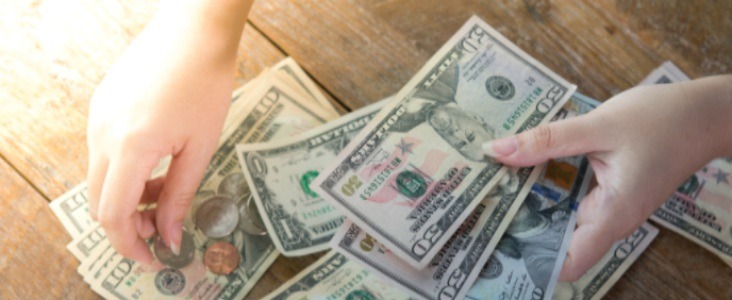
Fun Facts and weird things about your cash. Let’s face it, thinking about money, or in particular the lack thereof, can be a source of stress for many folks, especially around the holidays.
But as it happens, there’s much more to money than its ability to invoke panic as it pertains to your finances. In fact, money, its manufacture and lore surrounding it is replete with quirks and curiosities.
Beyond its face value, money is packed with fascinating stories and oddball trivia that might just change the way you see that crumpled bill in your pocket. From the wild history of currency and the surprising origins of coins and notes, to the way our cash system has evolved—and is still evolving—money is more than just a means to an end. Exploring these nuggets of financial trivia can even enrich your understanding of how currency shapes our daily lives and plays a role in the global marketplace.
So, whether you’re a history buff, a trivia lover, or just someone in need of a little distraction from your wallet’s woes, read on for a collection of fun facts and historical tidbits about the dollars and cents we use every day. So if you’re looking for a quick respite from your cash concerns, allow me to offer you a few fun and different ways of looking at your money:
- The origins of the Secret Service lie in money, not presidential protection. That’s right, when the agency was created in 1865, its purpose was to put an end to rampant counterfeiting, which was high after the Civil War. Experts estimate as much as one half of all cash in circulation was bogus. At the end of the Civil War, counterfeit currency was such a huge problem that nearly one-third of all U.S. paper money was fake, threatening the country’s financial stability. To address this crisis, the Treasury Department established the Secret Service, tasking it with suppressing counterfeiters and restoring trust in the nation’s money. The agency didn’t pivot to guarding the President until much later—1901, in fact—after the assassination of President William McKinley.
- Over the course of its history, the U.S. penny has been subject to a makeover. Noted American Benjamin Franklin had the honor of designing the first penny in 1787. However, his motto of choice, as opposed to the current “E PLURIBUS UNUM,” was “MIND YOUR BUSINESS.” Wise words indeed, no matter where they’re emblazoned. What’s more, the makeup of the coin has changed over time. Originally, pennies were made of 100 percent copper. However, nowadays they’re 95 percent zinc with only a copper coating.
- And speaking of pennies, they’re not exactly cheap. Did you know it costs between 1.7 and 2.4 cents to make each one of those little buggers?! Doesn’t seem financially sound, now does it?
- In terms of ink used, money making takes the cake. Every day the nation’s two active money-printing facilities use 9.7 tons of ink to craft your cash. The money factories, also known as the United States Bureau of Engraving and Printing, are located in our nation’s capital city and in Fort Worth, Texas.
- Kids are making bank… The average monthly allowance for our country’s ankle biters is nearly $65, so says the American Institute of CPA’s. I don’t know about you, but that’s a far cry from my measly $2 stipend when I was just a wee sprout.
- …and so is the TSA! It seems those airport checkpoints utilized by the Transportation Security Administration are a magnet for your loose change, which finds its way into the TSA’s coffers. Recently, the government agency pocketed nearly $800,000 in loose coins at airports nationwide.

- Paper money is a misnomer. The green stuff isn’t paper at all. Instead, your cash is manufactured with 75 percent cotton and 25 percent linen. Changes your entire perspective, doesn’t it?
- Bring back the big money! The largest bill ever printed was a $100,000 gold certificate. Unfortunately, it was only produced from December 1934 until January of the next year. Seems the big bucks go quickly!
- Paper money isn’t too tough… Most bills don’t last very long, what with the constant exchange going on. It seems the $10 bill is the weakling of the bunch, staying in circulation less than 5 years on average. The $1 bill fares slightly better, usually lasting around six years, but the $100 takes its punches considerably better, hanging around for about 15 years or so.
- …but it’s definitely foldable… Apparently you can fold bills anywhere from 4000-8000 times before they wear out.
- …and you can nuke bills to fit them into a vending machine! Ever tried to jam a crumpled bill into a vending machine? Not so easy, right? The remedy? Slip it into the microwave for 20 second to straighten it right up.
- The new $100 bill is crazy-intricate. The durable bill is woven with a blue ribbon containing countless micro lenses which give the illusion of a dancing Liberty Bell. Far out!
- The illusive $2 bill, you say? Um, not so much. As exciting as it is to see one, $2 bills aren’t nearly as hard to come by as you might expect. In fact, chances are your local bank can issue your next withdrawal in $2 increments if you ask nicely. But here’s where things get interesting—there are actually about 1.2 billion $2 bills still floating around out there! First printed in 1862 (originally with Alexander Hamilton’s face—sorry, Jefferson), these rare birds are still in active circulation. Part of their mystique comes from their scarcity in daily transactions, which has led to some wild superstitions: At one point, folks believed $2 bills were bad luck and would literally rip off the corners to “reverse the curse,” inadvertently making them unusable. So, while they may seem like collector’s items, the elusive $2 bill is still out there—just waiting for its moment in the spotlight at your next cash withdrawal.
- Money can be pretty grubby. A few years ago scientists discovered that nearly all paper bills, 94 percent to be exact, are loaded with bacteria. Blame all the handling! The good news is the vast majority of the bacteria won’t land you in your sick bed, but beware, about 7 percent of the bacteria can put you at risk for everything from pneumonia to the flu.
- Paper money has a strong hold on the flu virus. That pesky bug can only survive outside the human body for 48 hours, but it can live quite comfortably on a bill for more than 10 days.
- Monopoly money is king. Each year up to $50 billion worth of the fake currency is printed, besting the U.S. Bureau of Engraving and Printing’s production of approximately $1.3 billion worth of currency.
Why Money Trivia Matters
You might be surprised at how diving into quirky facts about money can change your perspective. Beyond making you a hit at trivia night, learning the odd stories and historical twists behind your cash helps peel back the layers of our financial system. Suddenly, that bland old bill in your wallet transforms into a miniature artifact, tracing stories that stretch from the minting presses of Philadelphia to the stock floors of Tokyo.
Understanding the eccentricities and milestones in currency—how it’s been forged, altered, counterfeited, and hoarded—sharpens your sense of just how money works in the big global machine. You start to see that the dollars and coins we handle every day aren’t just means for buying lattes; they’re part of a worldwide web of trade, history, and, yes, a few good laughs along the way.
Ever Wondered Which Currency Claims the Title of ‘Oldest Still in Use’?
If you thought your stash of loose change had been around a while, consider this: the world’s oldest currency still jingling in pockets is the British pound. Dating all the way back to 775 AD—yes, knights, chainmail, and all—the pound got its start when Anglo-Saxon kings introduced silver pennies to the land.
Despite centuries of wars, queens, kings, and the occasional suspicious meat pie, the pound remains in circulation today. In fact, it holds its own on the global stage as one of the most traded currencies alongside the dollar, euro, and yen—a true heavyweight in the wallet world.
Spare Change: To Spend or to Stash?
If you’ve got a jar, cup, or random sock drawer jingling with coins, you’re in good company. Turns out, the majority of Americans are natural-born coin collectors—whether intentionally or not! Surveys suggest that more than half of folks let their spare change gather dust (and, occasionally, sticky residue from unknown sources), rather than spending or exchanging it.
Interestingly, men are a little more likely than women to hoard these metal treasures. Most people think they have about $28 in coins lying around, but when it comes time to cash them in, surprise! They typically end up with double that amount rattling around the house.
So next time you trip over that piggy bank or find a pile of quarters in the couch cushions, remember: you’re adding to a long-standing American tradition of accidental saving.
So there you have it, a bit of interest for a very common, everyday thing – cash. But remember, if you find your cash concerns aren’t limited to the quirks and curiosities listed above, the team at American Credit Foundation is on hand to help you sort it out.